Portfolio
What I’ve researched, designed and presented.
Interactive Media & Game Design

🦩 Flamingo Conservation Game
A bilingual web game about flamingo species, habitats, and conservation — installable as an app, playable with no account.
Read Case Study →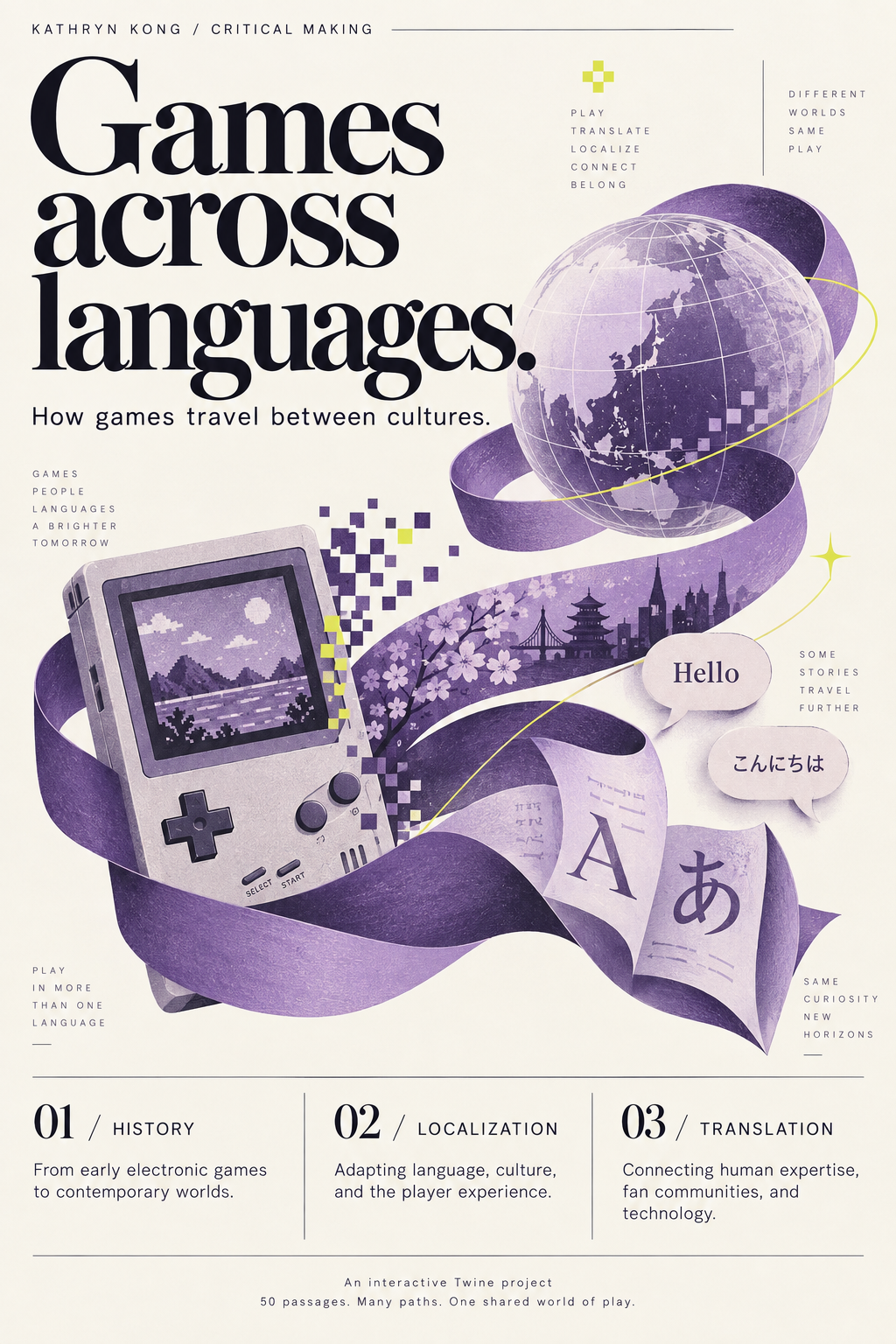
✍️ Digital Exploration of Game Localization
An interactive hypertext built in Twine, exploring the history of game localization.
Launch Project →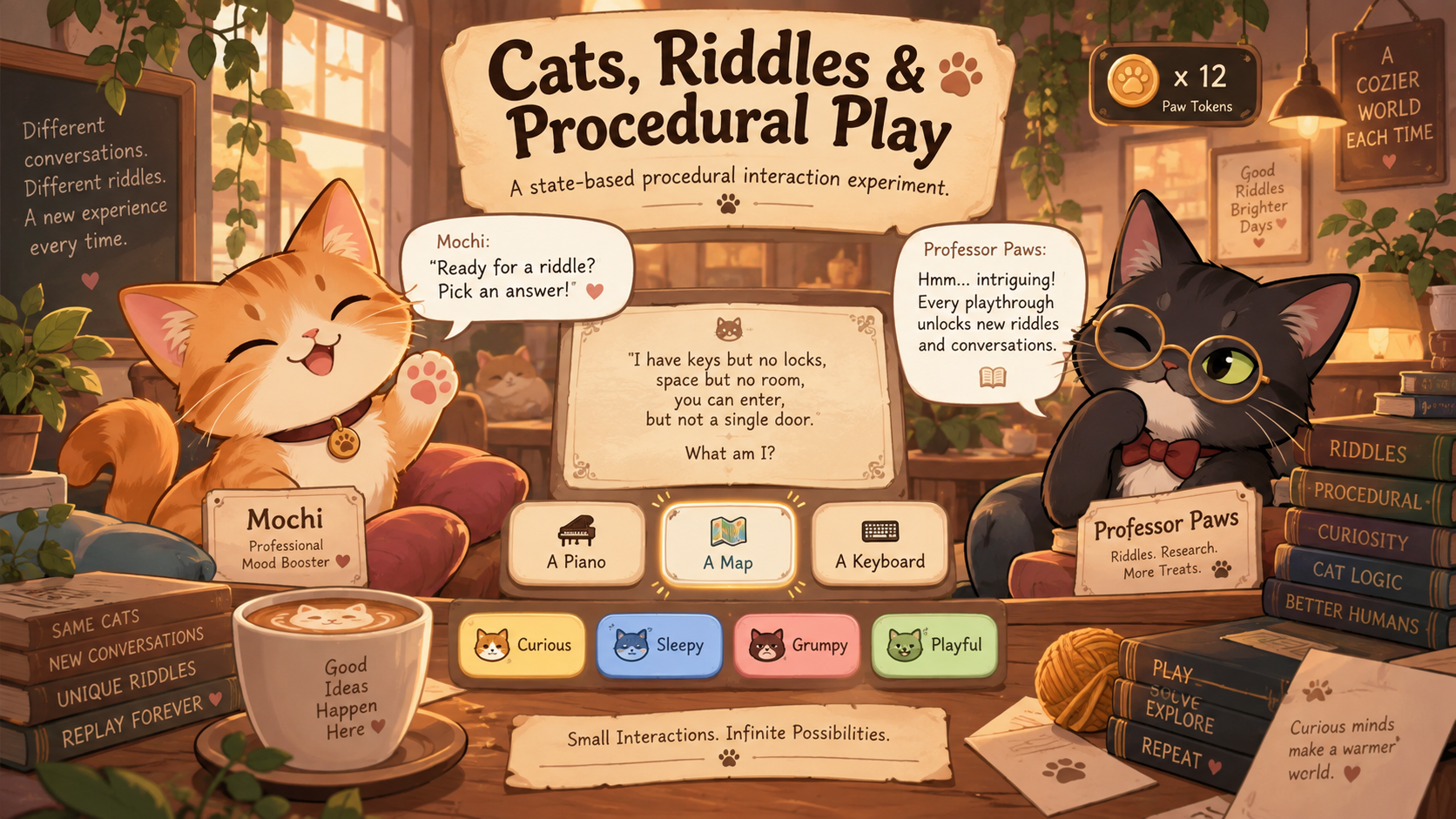
🐱 Cats, Riddles & Procedural Play
A state-based microgame where player choices change character moods, dynamically shaping dialogue, riddles, and rewards across playthroughs.
Play the Game →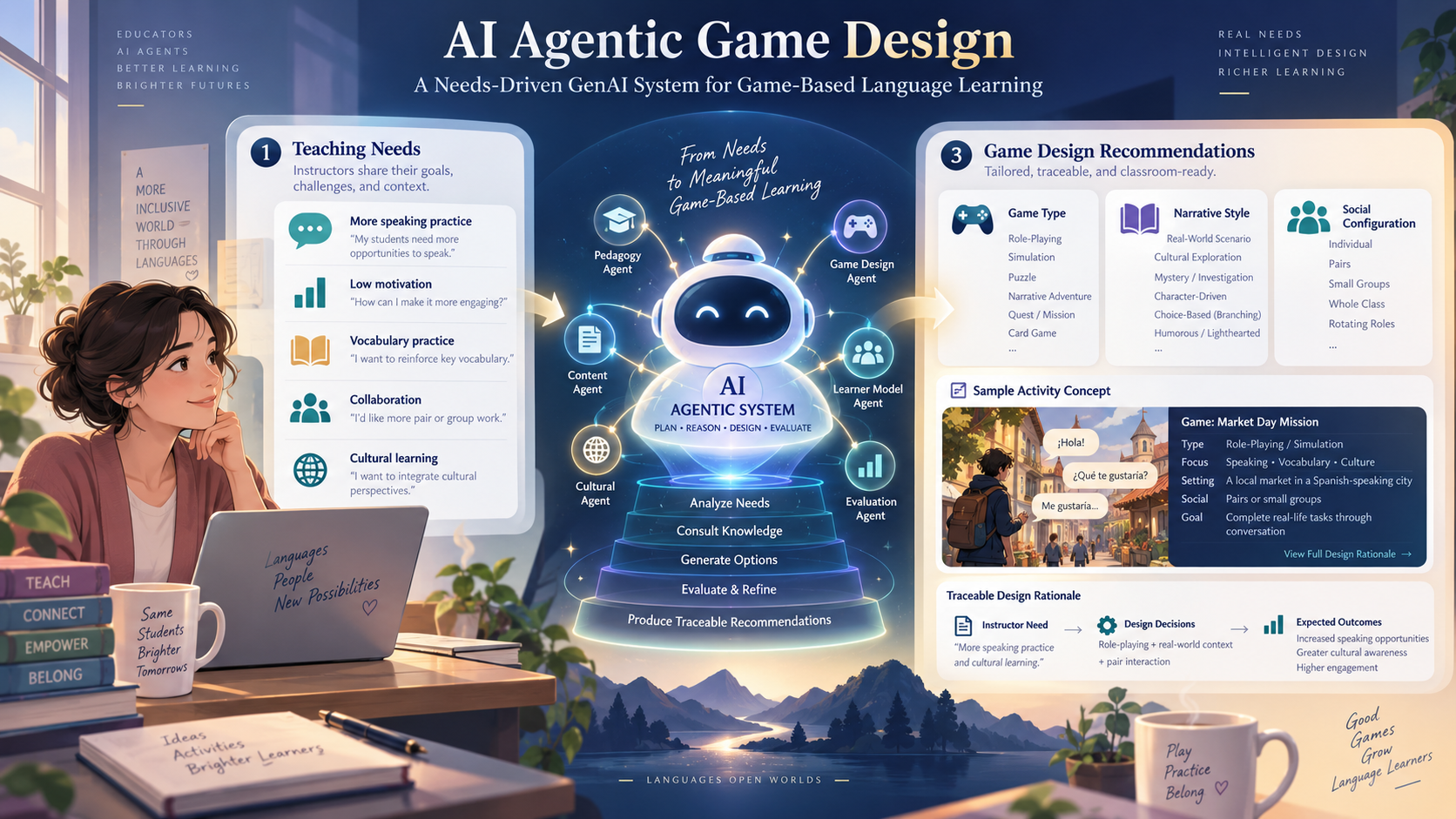
🤖 Agentic AI System Design
A Needs-Driven GenAI System Design Study for Game-Based Language Education in Higher Education.
Read the Intro →Professional Practice
Live
Mato Anomalies — Game Localization

Project
Mato Anomalies is a narrative-driven RPG blending turn-based combat, dungeon exploration, and detective-style visual novel sequences.
My Contribution
• Specialized in translating and localizing gaming content, developing an understanding of UX and service design principles.
• Conducted research to inform content adaptation, ensuring cultural relevance and user engagement.
Research & UX Prototypes
In Progress
Game-Based Learning & UX Research
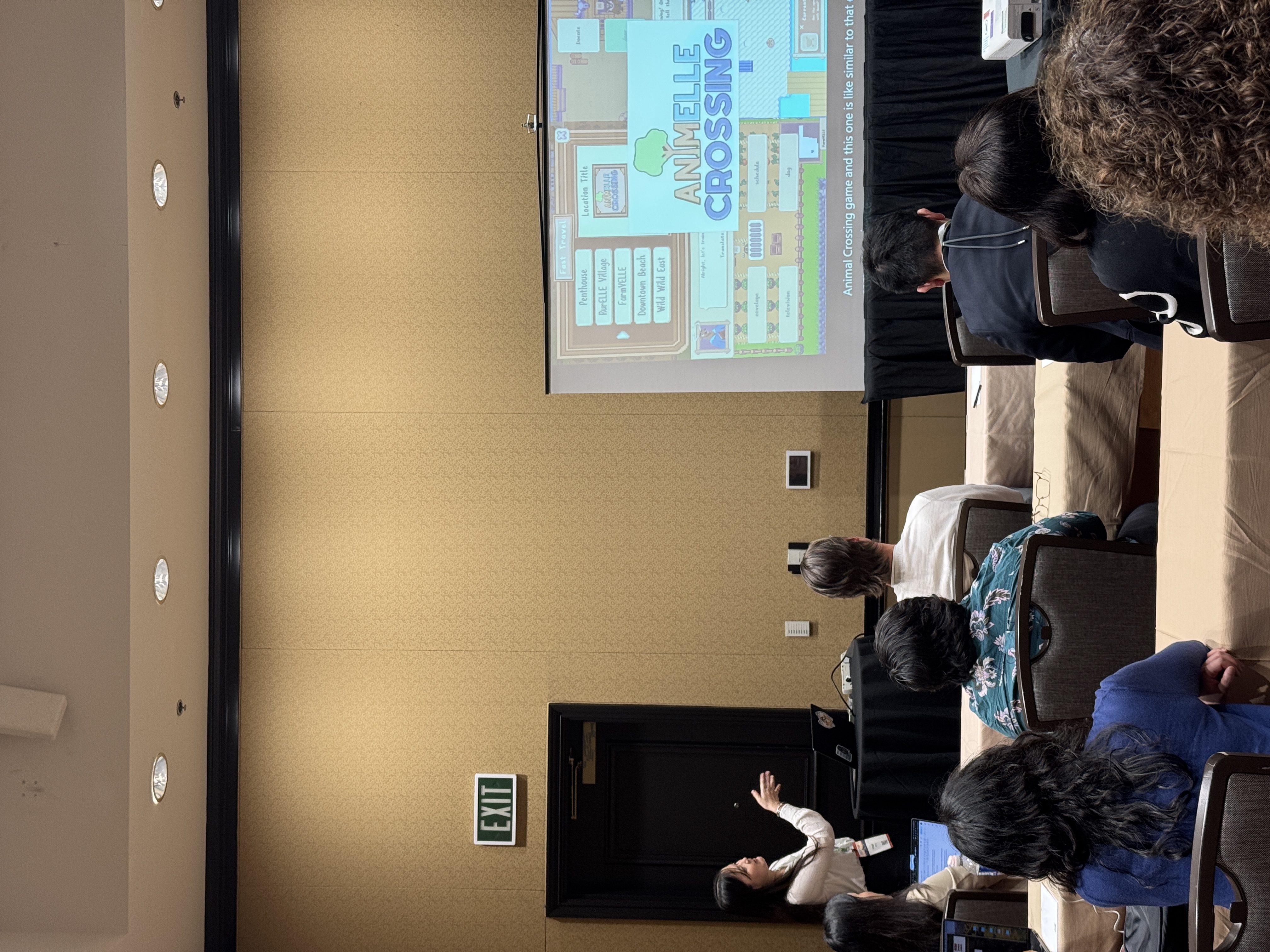
Evaluating game-based and immersive language-learning experiences through UX research.
My Role
- Moderated laboratory studies
- Conducted and assisted with user interviews
- Analyzed surveys
- Observed VR and desktop gameplay sessions
- Translated user behavior into research and design insights
See the Research page for the academic framing of this project, related publications, and presentations.
Content coming soon
Agentic AI System Design
The Problem
- Quality Gap — Effective game-based learning (GBL) requires more than adding game elements.
- Translation Gap — Language instructors know their needs, but not always how to translate them into game design.
- Design Support Gap — General-purpose GenAI tools need structured pedagogical guidance.
How can a GenAI-assisted design tool support university language instructors in developing game-based learning activities that address their documented instructional needs?
Theoretical Framework
- Needs Analysis — Documented instructional needs; teaching contexts, constraints, and priorities; design requirements for activity design. (West, 1994)
- GBL + SLA Principles — Learning goals embedded in gameplay; mechanics, feedback, interaction, and narrative; meaningful communication and output. (Swain, 1985; Long, 1996; Reinhardt & Sykes, 2012; Godwin-Jones, 2014)
- GenAI-Assisted Instructional Design — Translates needs into design through a structured, traceable, revisable workflow that supports rather than replaces instructor judgment. (Kohnke et al., 2023; Lee et al., 2026)
Methodology — A Two-Phase Needs-Driven Design Study
- Phase 1 — Needs Analysis (“What do instructors need?”) — Survey and interviews with university language instructors; identify instructional bottlenecks, constraints, and priorities; synthesize documented needs into design requirements. (West, 1994)
- Phase 2 — Agentic System Design (“How can the tool translate needs into GBL design?”) — Build a needs-to-design workflow for GenAI-assisted recommendations; map needs to game type, mechanics, narrative, and social configuration; generate 1–2 illustrative GBL activity cases as proof of concept. (Amershi et al., 2019; GBL/SLA design literature)
Scope: illustrative game cases demonstrate the system’s design logic, not presented as a full implementation or effectiveness evaluation.
Proposed AI Agentic System Workflow
From documented instructional needs to structured game-based learning activity designs:
- Instructional Context Consultant — Interprets instructor-provided goals and constraints, identifies GBL design requirements, and considers skill, proficiency, context, and constraints to recommend a game type and core mechanics. → Output: Design brief
- Game Design Specification Agent — Maps requirements to mechanics, narrative, feedback, and social configuration; generates a JSON game design specification; flags unresolved design decisions for the instructor. → Output: Traceable design logic
- Template Matching Agent — Matches the specification to a template category, adjusts difficulty, content, and classroom fit, and revises the output before approving the final activity design. → Output: Curated template library
Workflow can be orchestrated through n8n or a similar agentic automation system.
See the Research page for the academic framing of this dissertation project.